The Continuity Way helps you build household systems you understand and use every day—so meals, information, supplies, communication, and essential routines keep working when life changes.
Useful every day built into household lifeSkills and systems understood and practicedCalm confidence built one step at a time
CONTINUITYfor everyday life
MealsWaterHomeRecordsHealthPlansSkillsFinances
The Continuity philosophy
Use it in ordinary life. Trust it when life isn’t ordinary.
The Continuity Way is the belief that a prepared household is not the one that owns the most. It is the one that understands, uses, and maintains the systems that keep everyday life moving. By strengthening food, water, safety, communication, finances, health, and records in small, repeatable steps, a household becomes more capable during ordinary disruptions and emergencies—without building life around fear.
Preparedness becomes a natural result of useful household systems that remain familiar, current, and dependable.
01
Build for today
Choose improvements that make life easier now: a pantry connected to real meals, records you can find, safer routines, and supplies kept where they are actually used. If a system serves the household today, it is more likely to stay current.
02
Know how it works
Do more than own the item or write the plan. Cook the meal, test the light, locate the shutoff, practice the contact plan, and teach someone else. Familiarity turns supplies and information into real household capability.
03
Let readiness follow
As useful systems become part of ordinary life, the household becomes more able to handle illness, outages, tight weeks, schedule changes, and larger disruptions. Readiness grows from steady use—not fear or last-minute buying.
Everyday food continuity
The Continuity Kitchen.
These books help families build a pantry they understand and use—making everyday meals easier, reducing waste, and creating dependable food continuity as a natural result.
“The best-prepared pantry isn’t the fullest one. It’s the one you actually know how to use.”
THE CONTINUITY KITCHENPANTRY SYSTEMREBECCA ALBRECHT
Available now · Volume One
The Pantry System
A kitchen that works every day
Learn how familiar staples work together, turn one ingredient into many meals, reduce waste, simplify planning, and build real confidence with the food already on your shelves.
THE CONTINUITY KITCHENMASTER RECIPESREBECCA ALBRECHT
Available now · Volume Two
The Master Recipe Collection
70 flexible master recipes
Everyday breakfasts, breads, soups, main dishes, desserts, and pantry foundations—with practical swaps and clear connections from today’s meal to tomorrow’s.
THE CONTINUITY KITCHENVOLUME THREEREBECCA ALBRECHT
In development · Volume Three
The Next Continuity Kitchen Volume
The food and pantry series continues
The third volume is in development and will extend the practical, use-what-you-store approach of the first two books. Details will be shared as the manuscript takes shape.
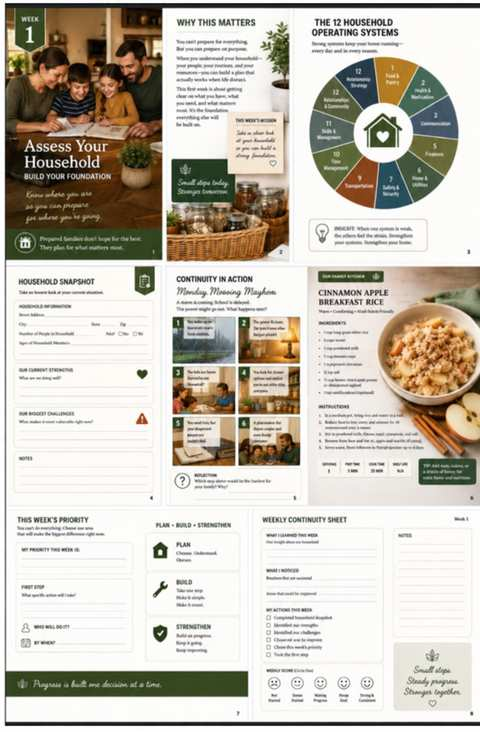
Each week strengthens one practical part of the household—from food and water to records, communication, safety, transportation, finances, and rest. The goal is steady progress that improves life now and makes the household more capable when circumstances change.
1
PlanUnderstand the week’s purpose, assess what you already have, and choose a realistic goal.
2
BuildAdd, organize, or improve one useful part of the household system without trying to do everything at once.
3
PracticeUse the plan, skill, supply, or information so it becomes familiar before it is urgently needed.
✓
Printables that stay usefulRecord decisions, information, and progress in pages designed to be reviewed and updated.
Each system begins with routines you already use. Open a topic to see why it matters in everyday life and four practical places to begin.
01
Food & Pantry
Build a working pantry from foods your family already eats—and meals you already know how to make.
Meals · pantry rotation · cooking skills · food flexibilityExplore this system →
Food continuity is not measured by how many cans you own. It is the ability to make familiar meals when time, money, energy, transportation, or utilities are limited. A useful pantry connects ingredients to complete meals and rotates naturally through ordinary family life.
Useful now—not only in an emergency
On an ordinary day, this means easier meal planning, fewer last-minute grocery trips, less waste, and more confidence using what is already on the shelf.
Start with one small step
List ten meals your household already eats.
Identify the shelf-stable ingredients shared by those meals.
Cook one complete pantry meal and record what it required.
Build a two-week meal reserve, then expand gradually.
02
Water & Utilities
Prepare for temporary service interruptions with safe, practical backups your household understands.
Water · power · heat · lighting · household shutoffsExplore this system →
Water planning includes drinking, cooking, sanitation, pets, and basic cleanup. Utility continuity means knowing how to respond safely when electricity, gas, heat, or running water becomes unavailable—and knowing when conditions require outside help or relocation.
Useful now—not only in an emergency
These preparations also improve routine home maintenance: labeled shutoffs, charged lights, working equipment, and fewer unanswered questions when a service problem occurs.
Start with one small step
Store an initial three-day drinking-water supply.
Label shutoffs and make sure responsible adults know where they are.
Create one accessible lighting and charging station.
Plan one safe backup for cooking and temperature control.
03
Home & Safety
Reduce preventable risks and make the home easier to navigate, maintain, and leave safely.
Alarms · exits · first aid · hazards · home maintenanceExplore this system →
A safer home begins with ordinary maintenance: working alarms, clear exits, secure storage, first-aid supplies, visible addresses, and fewer preventable hazards. The plan should also account for children, older adults, mobility limitations, and pets.
Useful now—not only in an emergency
Good home-safety systems prevent ordinary injuries and make repairs, caregiving, and household handoffs easier—not just emergency response.
Start with one small step
Test smoke and carbon-monoxide alarms.
Walk every exit route and remove obstacles.
Create one accessible home safety and first-aid station.
Make sure everyone knows the home address and two ways out.
04
Communication
Give everyone a short, memorable plan for connecting when family members are separated.
Contacts · meeting places · family messages · paper backupsExplore this system →
A communication plan reduces confusion when family members are at work, school, appointments, or different ends of town. It should be short enough to remember, simple enough to practice, and available both digitally and on paper.
Useful now—not only in an emergency
The same plan supports school pickups, caregiving changes, lost phones, travel, and any ordinary situation in which the household needs reliable information quickly.
Start with one small step
Choose an out-of-area contact.
Select one nearby and one out-of-neighborhood meeting place.
Agree on a short status-message format.
Print a wallet-size contact card for every family member.
05
Finances
Create enough organization and breathing room to keep essential obligations moving through change.
Essential bills · emergency funds · insurance · income interruptionsExplore this system →
Financial continuity includes a modest emergency cushion, clear spending priorities, current insurance information, accessible account contacts, and a plan for temporary income disruption. It is less about a perfect savings number and more about knowing what must be protected first.
Useful now—not only in an emergency
A clear financial snapshot reduces missed bills, duplicate expenses, and confusion when one person is ill, traveling, or temporarily unable to manage the household accounts.
Start with one small step
List essential monthly obligations, due dates, and payment methods.
Identify which expenses must continue during an interruption.
Begin a small, separate household reserve.
Keep current insurance and account contacts in the Continuity Binder.
06
Health & Records
Keep care information, vital documents, and household decisions current and findable.
Medical care · vital records · pets · property · authorized accessExplore this system →
Health and records continuity helps family members and caregivers make safer decisions when someone is ill, injured, away from home, or unable to speak for themselves. The goal is accurate information that an authorized person can find, understand, and use.
Useful now—not only in an emergency
Organized records simplify appointments, insurance questions, school forms, pet care, home repairs, taxes, travel, and the many ordinary moments when the right information is needed quickly.
Start with one small step
Create a medication, allergy, provider, and insurance summary for each person.
Gather identity, property, care, pet, and household records in one secure system.
Separate quick-response pages from sensitive information.
Name who may access the information and review it every six months.
Near launch
A binder you use before you need it.
The Continuity Binder is a working household reference for everyday decisions, emergencies, response, and recovery. The download package will include editable Word, fillable PDF, and Excel formats that can be maintained as household information changes.
THE CONTINUITY BINDERA Family Emergency Preparedness & Vital Records Binder
Free practical guidance
Field notes for a steadier home.
These are complete, practical lessons—not short previews. Each one explains why the topic matters, what commonly goes wrong, and a few useful steps you can take now.
Begin with a clear picture of your household’s strengths, needs, and practical next steps.
Preparedness often begins with a shopping list, but the most useful first step costs nothing: understand how your household actually works. The goal is not to prepare for every possible event. It is to identify the routines that keep people fed, healthy, informed, mobile, and cared for—and strengthen the places where one interruption would create immediate strain.
Start with an ordinary week
Walk through meals, medication, transportation, work, school, caregiving, pets, communication, sleep, and bill paying. Notice which tasks depend on one person, one device, one vehicle, or one service. Those single points of dependence deserve attention before specialty supplies do.
Plan for effects, not dramatic scenarios
Instead of trying to predict the emergency, prepare for common effects: no power, limited water, illness, lost income, a closed road, a broken phone, or the need to leave quickly. The same practical household systems support you across many different situations.
Use what you already have
Gather flashlights in one known location, print an important phone number, label a water shutoff, plan two pantry meals, or update a medication list. Small improvements reveal what is genuinely missing and prevent expensive purchases that never become part of household life.
Try this now
Write down the five routines your household relies on most.
Choose the interruption that would create the greatest immediate strain.
Make one improvement with what you already own.
Add only the supplies needed to make that improvement work.
Kitchen & pantry
Why most food storage fails
A full shelf is not the same as a working pantry. Start with connection, versatility, and foods your family already knows.
Food storage fails quietly. Ingredients are purchased because they last a long time, pushed behind newer groceries, and eventually discarded because no one knew what to make with them. A continuity pantry is different. It is a working food system built from ingredients your household recognizes, meals you can actually prepare, and a rotation pattern that happens through everyday cooking.
Connect food to real meals
Begin with meals, not quantities. Choose breakfasts, lunches, dinners, snacks, and comfort foods your household already accepts. Then identify which ingredients appear across several of those meals. Rice, oats, beans, pasta, canned tomatoes, flour, broth, fruit, vegetables, and seasonings become useful when they have clear jobs.
Test the entire meal
A shelf-stable recipe may still depend on refrigerated milk, fresh eggs, large amounts of water, or an electric appliance. Cook pantry meals now and test substitutions while conditions are normal. Record what worked, what your family disliked, and what equipment or fuel the meal required.
Rotate without creating extra work
Store pantry food where it can be seen, date it, and use the oldest items first. Replenish what you cook. A modest supply that moves through ordinary meals is more dependable than a large reserve no one wants to touch.
Try this now
Choose five familiar meals that rely mostly on pantry ingredients.
List the shared ingredients and the quantities needed for two rounds of each meal.
Cook one complete pantry meal this week.
Replace what you used and adjust the plan before expanding it.
Home systems
The first 15 minutes of a power outage
A calm, practical sequence for checking people, protecting food, gathering light, and deciding what comes next.
The first few minutes of an outage are for orientation, not alarm. Most outages are temporary, but a calm sequence helps you catch hazards early, protect food and equipment, and decide whether the household can remain comfortable and safe if service is not restored quickly.
Minutes 0–5: check people and hazards
Confirm that children, older adults, pets, and anyone using medical equipment are safe. Look outside to see whether neighbors and streetlights are affected. Check for smoke, unusual odors, downed lines, flooding, or sounds that suggest an electrical problem. If you suspect a gas leak or immediate danger, leave and contact emergency services from a safe location.
Minutes 5–10: establish safe light and information
Use flashlights or battery lanterns rather than candles. Preserve phone batteries and check your utility’s official outage information if service is available. Place one light in a central location instead of turning on every device. Make sure pathways, stairs, and bathrooms are safely lit.
Minutes 10–15: protect food and make the next decision
Keep refrigerator and freezer doors closed. Unplug sensitive electronics if power is fluctuating, and leave one light switched on so you know when service returns. Consider temperature, medical needs, water access, expected duration, and road conditions before deciding whether to stay or relocate.
Try this now
Put working flashlights where everyone can reach them.
Write the utility outage number on paper.
Identify medical, temperature, or mobility needs that change your stay-or-leave decision.
Practice the first-15-minutes sequence during a normal evening.
Family & communication
A contact plan your family will remember
Build a simple communication plan, choose meeting points, and practice it before anyone is under pressure.
A communication plan should work when family members are at school, work, appointments, or different ends of town. It does not need pages of instructions. Everyone needs the same short answers: Who do I contact? Where do I go? What do I do if calls do not connect?
Choose two meeting places
Select one location close to home for a situation such as a fire or neighborhood evacuation, and one location outside the immediate area if returning home is not possible. Choose places that are recognizable, accessible, and appropriate for children or family members with mobility needs.
Use an out-of-area contact
Local calls may be difficult when networks are congested. Ask a trusted person outside your area to receive updates and relay information. Every household member should have that person’s name and number on paper, not only in a phone.
Keep messages short
Text may connect when voice calls do not. Use one repeatable format: name, current location, condition, and next step. For example: “Rebecca—at work—safe—going to the outside meeting place.” Avoid repeated calls that drain batteries and add confusion.
Try this now
Choose one nearby meeting place and one outside the neighborhood.
Confirm an out-of-area contact who agrees to the role.
Give every person a printed wallet card.
Practice one short status message and one no-phone meeting drill.
Skills & knowledge
Own less. Know how to use more.
The right tool becomes preparedness only when you understand it, maintain it, and feel comfortable using it.
Supplies can support a household, but they cannot replace practiced capability. A tool you have never opened, food you have never cooked, or plan no one remembers may create more frustration when conditions are difficult. Confidence comes from ordinary repetition—not from owning the largest collection.
Practice under normal conditions
Cook with stored ingredients on a regular weeknight. Charge a phone from the battery bank. Find the water shutoff and use the correct tool. Read the fire extinguisher instructions. Set up the portable light before the room is dark. Practice reveals missing pieces while stores, instructions, and help are still available.
Share household knowledge
Many homes depend on one person who knows the passwords, medications, insurance details, breaker panel, pet routine, or family schedule. Choose one essential task at a time and teach another household member or backup caregiver how it works.
Maintain what you depend on
Batteries discharge, filters expire, stored water needs review, vehicles need fuel, and documents become outdated. Attach maintenance to routines you already keep, such as seasonal time changes, birthdays, tax preparation, or the first weekend of each quarter.
Try this now
Choose one tool or household system you own but rarely use.
Read the instructions and practice it safely this month.
Teach one other person how it works.
Record maintenance dates, replacement parts, and storage location.
Records & planning
The household information worth printing
Keep essential contacts, care information, accounts, and decisions available when a phone or internet connection is not.
Phones and cloud storage are convenient, but they should not be the only doorway to essential household information. A carefully chosen paper record helps an authorized family member or caregiver act when a device is missing, the internet is unavailable, or the person who normally manages everything cannot do so.
Print what supports immediate decisions
Start with household contacts, medications, allergies, providers, pharmacies, insurance contacts, utility numbers, school and caregiver information, pet care, meeting places, and instructions for essential home systems. Include enough detail to act without turning the binder into an unorganized archive.
Protect sensitive information
Not every page belongs in a go-bag or an unlocked kitchen drawer. Separate quick-response information from financial, identity, legal, and account records. Store sensitive pages securely, limit access, and tell the appropriate person how to reach them when needed.
Keep paper and digital records connected
Paper provides access during technology interruptions; encrypted digital copies provide backup if the paper set is damaged or unavailable. Use consistent section names and dates so the versions can be compared and updated without confusion.
Try this now
Print a current household contact and medical summary.
Add insurance, utility, school, caregiver, property, and pet information.
Choose who may access sensitive sections.
Review every six months and securely destroy outdated copies.
The Continuity Way shop
Useful tools. Steady progress.
The shop uses two clear paths: printed books through Amazon and original digital tools through the secure website cart as each product becomes ready.
AVAILABLE NOW · AMAZON
The Continuity Kitchen
Volumes One and Two are the food and pantry branch of The Continuity Way, designed to help households use familiar ingredients with greater confidence and flexibility.